Embedded Files
The word “intuition” contains “in”: something that comes from within. All our techniques share one aim: to let the person’s own resource resurface. Non-verbal hypnosis is a key to intuition.
The Secret of Intuition
The Secret of Intuition

The Vagus Nerve
The Vagus Nerve
What is intuition?
Jung wrote about intuition, as did many other researchers.
How can we know something without being aware of it?
Neuroscience increasingly studies how the conscious mind interacts with the body’s “unconscious” activities.
Intuition, often called the “sixth sense”, is a subject of particular interest to many researchers (references include Charles, 2004; Lieberman, 2000; Turnbull, 2003; Volz & von Cramon, 2006; Zagon, 2001).
Intuition is the product of processes we are not aware of.
These processes take place in the body. It has been observed, for example, that certain positions and postures are more closely connected than others to intuitive processes.
Consider an image: consciousness is the visible tip of a much larger iceberg (the primary process), below which many unseen processes (secondary processes) take place.
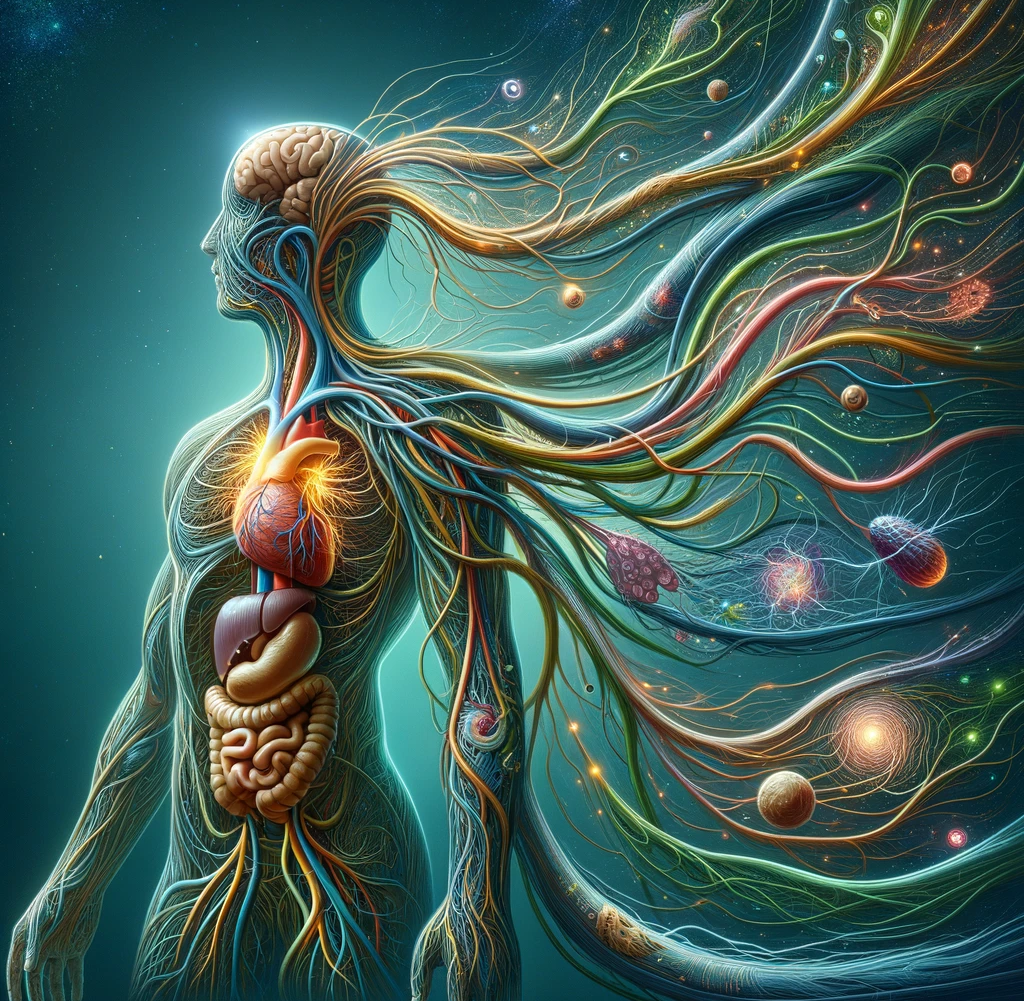
At the centre of these hidden processes is the vagus nerve, the tenth cranial nerve, which connects the brain stem to the heart, lungs and gut.
The vagus nerve plays a central role in our emotional reactions (Porges, 1993), in the sensory experience of emotional events and in our responses to traumatic situations (Levine, 1997). It reaches four main areas, called plexuses (networks of nerves):
the cervical plexus in the head,
the cardiac plexus in the heart,
the celiac plexus in the gut,
the pelvic plexus in the genitals (Komisaruk, Whipple, Crawford, Grimes, Liu, Kalnin, & Mosier, 2004).
Somatic psychotherapists regard these areas as the roots of our emotional health.

Intuition and Interoception
Intuition and Interoception
Stephen Porges, a pioneer of this field, studied infants, who have not yet developed verbal communication. Infants communicate non-verbally: through crying, movement and eye contact. Their body seeks contact as naturally as a young plant turns towards the light.
A “sixth sense”
Porges proposes a “sixth” sense: interoception, the perception of the internal state of the body. Its receptors lie in the organs and its signals travel mainly through the vagus nerve. The body continuously informs the brain about its internal state, much as a thermostat measures and adjusts the temperature of a room. Interoception carries unconscious processes that are essential to homeostasis, the body’s ability to keep its internal balance, so that our inner environment stays attuned to the outside world.
Zagon and His Research
Zagon and His Research
Porges is not alone. In a 2001 study, Zagon examines the vagus nerve, the largest visceral sensory nerve in the body (the nerve that carries the most information from the organs), often described as the body’s main route for sensory experience. In his view it does much more than regulate emotions, perceptions and cognitive processes.
Zagon suggests that the vagus nerve may also be the key to what we call a “sixth sense”. Starting from the idea that stress-related conditions are managed by vagal activity, he describes how this nerve links our emotional and cognitive experience through bodily sensations. He then proposes that a new neural pathway could develop at the end of the vagus nerve, in an area of the brain stem called the locus coeruleus.
Here the “sixth sense” means an intuitive, unconscious understanding that goes beyond the five traditional senses. For Zagon, the vagus nerve, central in managing stress-related conditions, helps weave our emotional and cognitive experiences together through sensory information.
The locus coeruleus
A central part of his hypothesis concerns the locus coeruleus, a small but important structure in the brain stem. It is a nucleus (a cluster of nerve cells) in the pons, the part of the brain stem involved in physiological responses to stress and panic. It is also the main site where the brain produces norepinephrine (noradrenaline), a neurotransmitter, or chemical messenger, that plays a key role in arousal and alertness.
Zagon suggests that a new neural pathway might develop at the end of the vagus nerve, precisely at the locus coeruleus. By acting on the vagus nerve in this region, he argues, it is possible to change how a patient perceives physical symptoms, and in turn how they live a physical condition emotionally and mentally.
Developing this idea, Zagon argues that effective action on the vagus nerve within the brain stem can transform how a patient perceives physical symptoms, and so significantly change the emotional and mental experience of a physical ailment. His research raises important questions about how closely our mental, emotional and physical experiences are connected.
Is this connection an altered state of perception, or a collaboration of physical, emotional and mental processes that together form what we call a “sixth sense”?
A possible answer: the perception of physical symptoms is not a simple process. It involves the interaction of several systems in the body, which together create an overall awareness, the “sixth sense”.
Top-Down and Bottom-Up Approaches in Therapy
Top-Down and Bottom-Up Approaches in Therapy
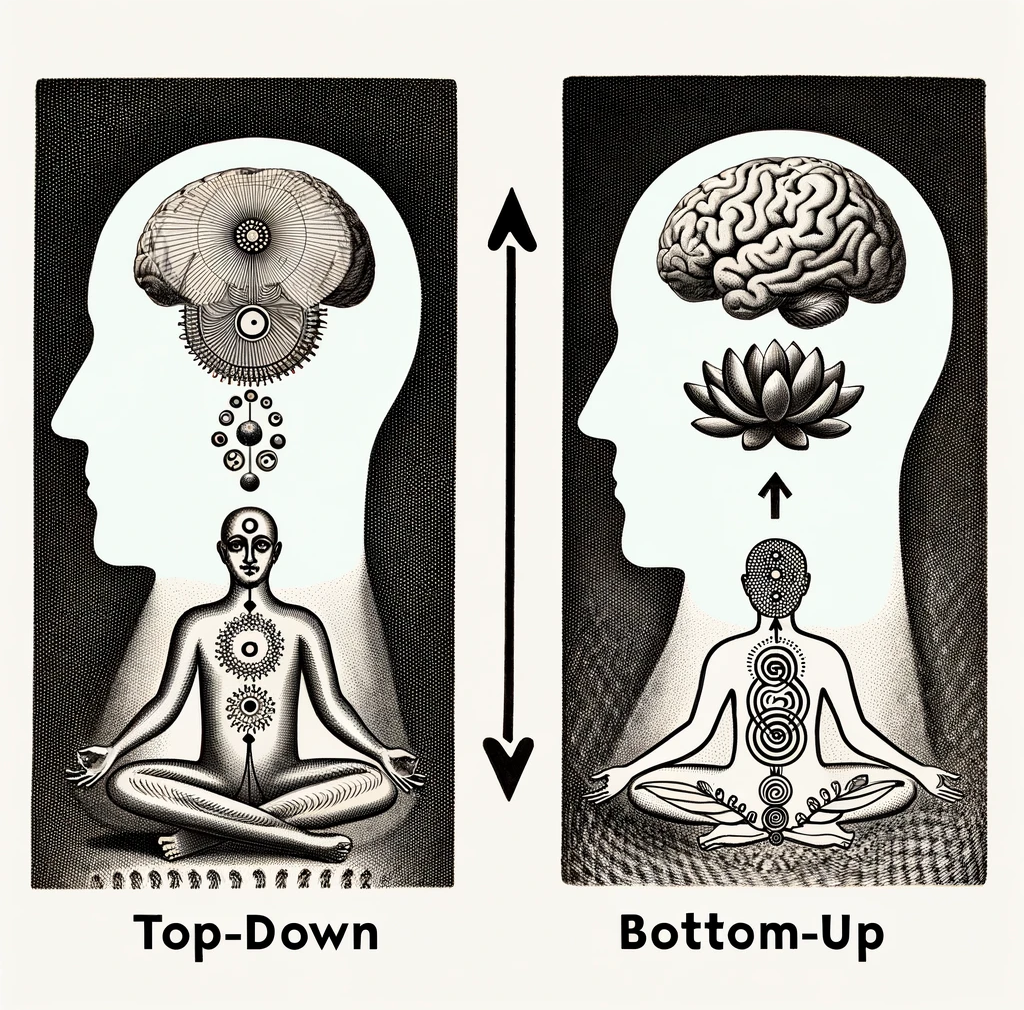
The most widespread approach in the world is top-down: the mind influences the body. Research shows that a bottom-up approach, from the body to the mind, also has scientific validity.
“Embodied intuition”, intuition that takes place in the body, and its connection with the nerve plexuses of the head, heart, gut and pelvis, has been studied in recent years. McCraty, Atkinson and Bradley (2004) examined the role of the heart, and Gershon (1998) the role of the gut, or enteric nervous system (the network of neurons in the digestive tract), in intuitive processes. These studies suggest that these parts of the body can gather and process information independently of cognitive functions.
Afferent and efferent nerves in different healing practices
Physiology distinguishes two types of nerves: afferent nerves, which carry signals from the organs to the brain, and efferent nerves, which carry signals from the brain to the organs.
Most body-oriented healing practices follow a “top-down” approach, as described by Ogden, Minton and Pain (2006). They start from cognitive processes and move towards bodily sensations, using thought as a bridge between mind and body.
The “bottom-up” process works the other way: it begins with bodily sensations, followed by emotional and cognitive responses. It is widely used in trauma therapies, as shown by Levine (1997), Ogden, Minton & Pain (2006) and Rothschild (2001), with the aim of an integrated experience. Siegel (2006) calls this “vertical integration”.
The Head: Rigid Neck and Difficulty Making Decisions
The Head: Rigid Neck and Difficulty Making Decisions
As for the head, Lieberman (2000) linked implicit learning (learning that happens without awareness) to intuitive processes through his research on brain damage. He points out that the basal ganglia, deep brain structures responsible for implicit learning and instinct, are closely associated with intuitive decision-making. Lieberman describes “social intuitions” as spontaneous gestures such as blinking, twitching or tilting the head to one side during a conversation. Observing the learning and movement deficits of patients with two degenerative diseases of the basal ganglia, Parkinson’s disease (PD) and Huntington’s disease (HD), he found that damage to the basal ganglia inhibited spontaneous, unconscious gestures. He concluded that difficulty with spontaneous movement also slowed decision-making in these patients.
Lieberman’s work supports the view that these spontaneous, involuntary movements are part of intuitive understanding, and strengthens the link between movement and decision-making.
In the study of non-verbal communication it is well known that a rigid neck goes with a rigid mentality. In our practice of non-verbal hypnosis we observed this well before polyvagal theory and neuroscience addressed it; today research is beginning to explain what our work had already shown.
Intuition and the Heart
Intuition and the Heart
To explore how intuition relates to the body, McCraty, Atkinson & Bradley (2004) carried out a study focused on the heart. They started from the hypothesis that the body, and the heart in particular, can perceive and react to emotionally charged information before the conscious mind is aware of it. They defined intuition as the immediate perception of information that normally lies beyond the reach of cognitive processes. This intuition is felt in body and mind as a certain knowledge or feeling about something that has not yet happened or is far away.
The study produced three main findings:
The heart appears able to respond to stimuli before the brain becomes cognitively aware of them.
The heart responded more strongly to emotional stimuli that were about to occur than to calm or neutral ones.
The study also found a gender difference: women showed a greater physiological response in the heart than men.
This pioneering research, centred on the heart’s electromagnetic field, opens new ways of understanding intuition. It suggests that the heart, together with other parts of the body, plays a significant role in how we perceive and respond to the world. It may lead to further studies on how different parts of the body contribute to intuitive experience and how closely the body is connected to our perceptions of the environment and our feelings.
Polyvagal Theory and the Heart
Polyvagal Theory and the Heart
Rhythmic breathing and Polyvagal Theory:
Rhythmic breathing, in tune with the heart’s rhythm, can activate the ventral vagal system (the branch of the vagus nerve associated with safety and social connection). It moves the body from a state of alert or fear, driven by the sympathetic nervous system (the system that prepares us for fight or flight), to a state of calm and safety. This reduces anxiety and also increases our capacity for social connection and empathy, two essential conditions for intuition.
Practical implications:
Once we understand the role of the vagal system in regulating emotions, we can use techniques such as rhythmic breathing to manage stress and anxiety and also to strengthen our intuitive and relational abilities. In therapeutic work or in moments of social tension, for example, consciously activating the ventral vagal system through breathing helps create a safer, more open environment for intuitive listening and empathy.
In short, polyvagal theory provides a neurophysiological framework that explains how rhythmic breathing and the heart’s intuitive response can be used to improve our emotional health and our connection with others.
Synthesis
Synthesis
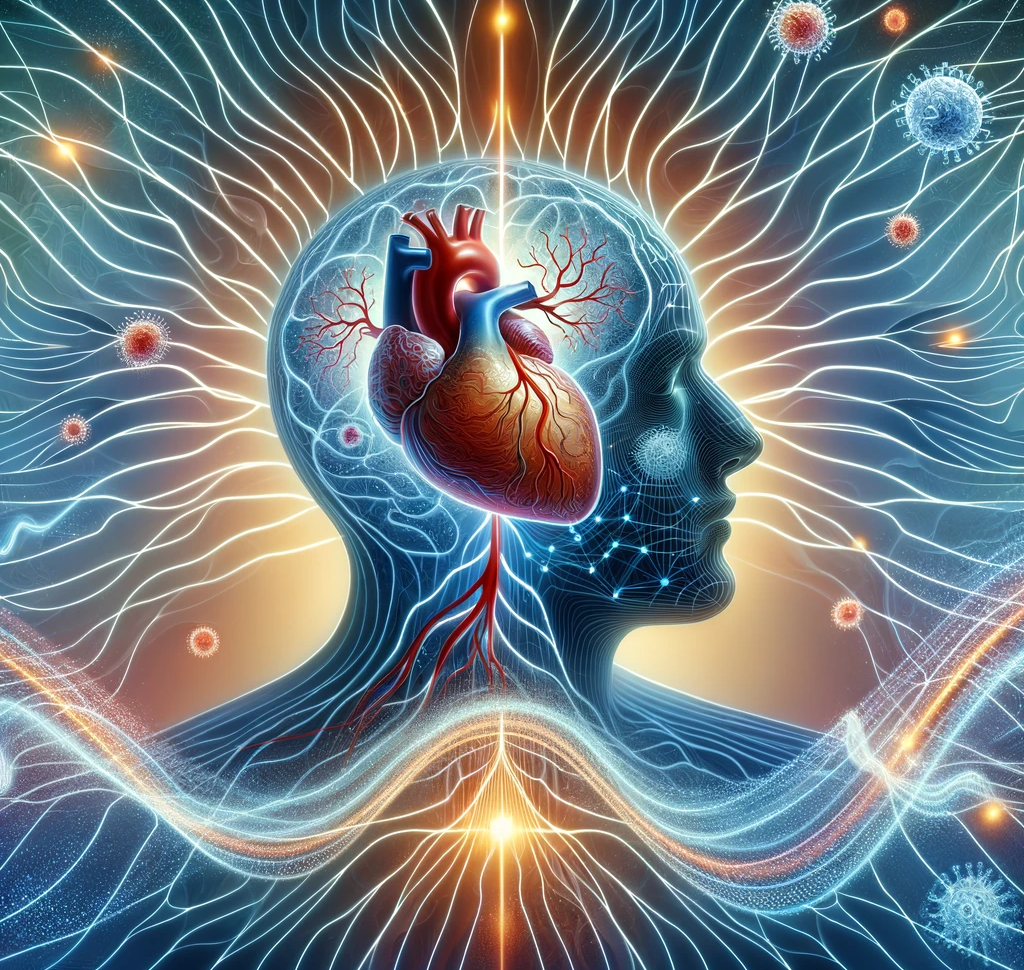
The pioneering study by McCraty, Atkinson & Bradley (2004) on intuition and the heart, read together with polyvagal theory, offers a comprehensive understanding of how our physiological responses, especially those of the heart, are bound up with our intuitive and emotional experience.
Intuition, the heart and Polyvagal Theory: a unified perspective
The heart’s response to emotional stimuli:
The study by McCraty and colleagues showed that the heart can respond to emotional stimuli before the brain becomes cognitively aware of them. This suggests that the heart has a more active role in processing emotional information than previously thought.
Because the heart responds more strongly to imminent emotional stimuli than to calm or neutral ones, it can act as an early warning system that alerts us to emotional changes ahead.
Rhythmic breathing as a bridge:
Polyvagal theory explains how rhythmic breathing, synchronised with the heart’s rhythm, can activate the ventral vagal system. This activation moves the body from a state of stress or fear to one of calm and safety.
This physiological shift can strengthen our intuitive abilities. When the heart calms and its rhythm aligns with the breath, body and mind become ready to perceive and process intuitive information more effectively.
Gender differences and intuitive experience:
The gender difference in the heart’s intuitive response, greater in women, opens new ways of understanding how intuition may vary between men and women. It may reflect differences in how the ventral vagal system is activated and responds.
Practical applications for emotional and intuitive understanding:
Understanding the role of the heart and the vagal system in regulating emotions leads to practical applications, such as rhythmic breathing techniques used in therapeutic settings or in daily life to increase emotional and intuitive awareness.
Where emotional understanding and empathy matter most, consciously activating the ventral vagal system leads to more empathic and intuitive interaction, to the benefit of personal and professional relationships.
In conclusion, McCraty’s findings on the heart’s intuitive response, together with the physiological explanation offered by polyvagal theory, form a strong framework. Together they suggest that the heart, working with the nervous system, plays a significant role in our intuitive and emotional experience and in how we connect with and perceive the world.
The Body as the Basis of Intuition
The Body as the Basis of Intuition
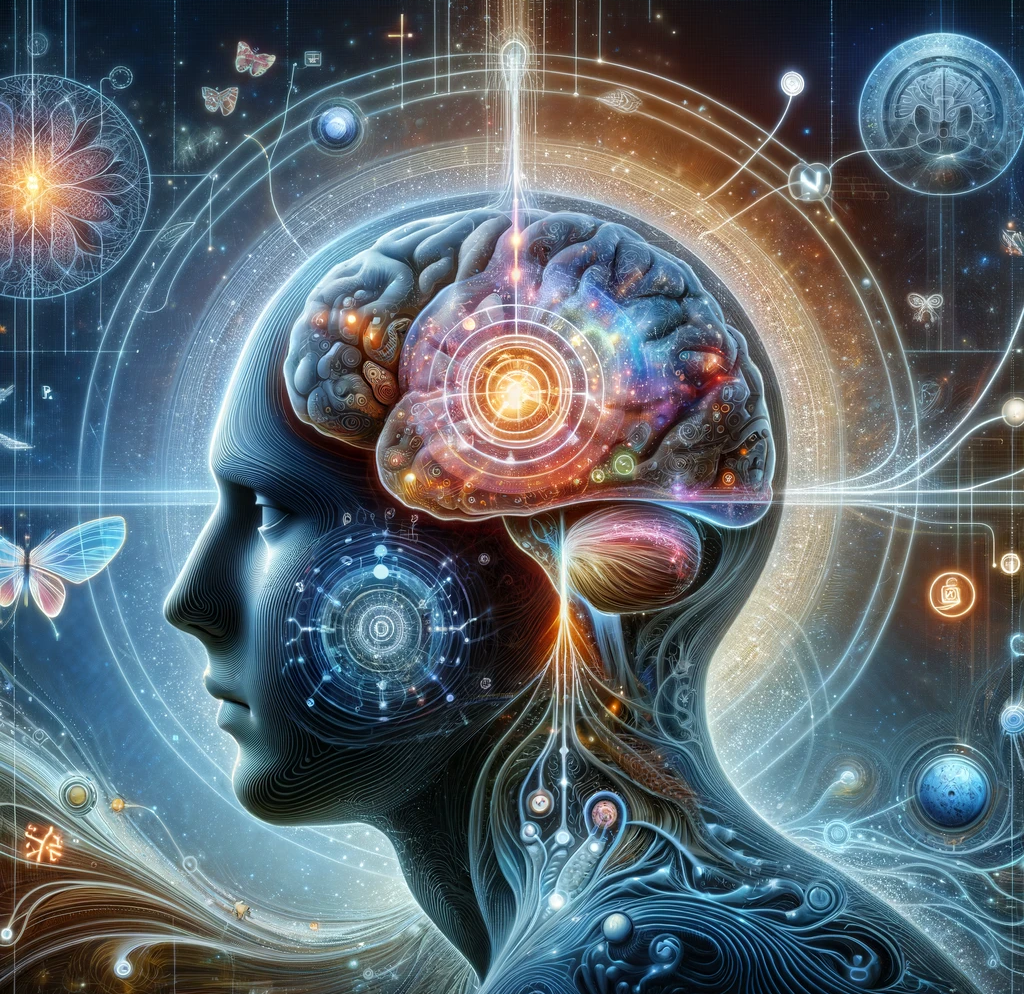
Intuition and the body: the key to intuition is non-verbal
A substantial body of neuroscientific research has examined how intuition works in the brain, especially during decision-making. Studies by Bechara, Damasio, A., Damasio, H., and Anderson (1994), Lieberman (2000), Turnbull (2003) and Volz & von Cramon (2006) have clarified the neural processes that underlie intuitive thought.
In psychobiology, researchers such as Schore (1994, 2003) and Siegel (1999, 2006) describe intuition as an interpersonal process: a silent exchange that unfolds through empathic connection between people. In this view intuition is more than a mental process; it is an instinctive, almost reflex response to information that often bypasses conscious reasoning.
Bucci (2007) adds a further idea: intuition may be part of non-verbal communication itself. It may emerge through symbolic means such as imagery, or through bodily sensations, from the sensory, motor or visceral systems. For body-based psychotherapy, where intuition is experienced physically, this is a direct confirmation.
Embodied practices therefore give direct access to intuition. They show that the body is an active participant in the intuitive process: it holds and expresses intuitive knowledge in a language beyond words. Practitioners and researchers can thus study intuition both as a cognitive phenomenon and as an experience rooted in the body.

More on Intuition and the Body
More on Intuition and the Body
Psychological research, including studies by Charles (2004) and Eisengart (1996), has shown that intuition is experienced physically in the body. In her study of intuition in psychotherapy, Charles classified participants according to Jung’s psychological types: Thinking, Feeling, Intuition and Sensation. Participants of the Intuitive and Sensing types showed heightened body awareness during intuitive experiences. Charles noted that sensation was crucial to intuitive awareness, as it was the main way participants perceived intuition. She nevertheless concluded, like Williams & Irving, that these sensations were reactions to the client’s body language rather than intuitive knowledge.
Vaughan (1979) identified four types of intuitive experience: physical, emotional, mental and spiritual. She described physical intuition as a strong bodily response in situations that do not logically call for it. Intuitive experience is not limited to physical sensations, but recording these sensations is a practical way to study intuitive phenomena.
To build a comprehensive model of intuition in psychotherapy, Petitmengin-Peugeot (1999) studied how intuition involves the therapist’s whole being, through sensory and emotional experience. The study identified three key elements: 1) understanding the physical or emotional state of another person, 2) experiencing spontaneous gestures such as “letting go”, “slowing down” and “listening with a panoramic sense”, and 3) finding solutions to problems without complete information for logical processing. These findings support the study of embodied intuition in psychotherapeutic practice.
Non-Verbal Hypnosis and Intuition
Non-Verbal Hypnosis and Intuition
In this video we develop intuition through non-verbal hypnosis. Gently swaying the head from right to left physically stimulates both hemispheres of the brain.
It also relaxes the neck muscles, which, when tense, can block the process.
The whole process takes place in a state of calm and safety.
Learn the method
Mesmeric Polyvagal Therapy is taught in the courses of Dr. Paret's School (ISI-CNV – Université Européenne): live seminars and online lessons, from the first-level Master to advanced training, with specific expertise in polyvagal hypnosis, trembling, completion of the response and ventral vagal stimulation. Request the programme and the next dates: our first contact is always a WhatsApp message, never a call.
→ Request information on the courses
→ Videos and international activity of Dr. Paret
→ marcoparet.com: the School of Dr. Paret
This site is available in: English · Italiano · Français · Русский · 中文
Research notes
A selection of peer-reviewed studies on polyvagal theory and vagal function that offer a scientific reading of the topics discussed in this article.
Dunn BD, Galton HC, et al. (2010). Listening to your heart: how interoception shapes emotion experience and intuitive decision making. Psychological Science, 21(12), 1835-1844. People who tracked their heartbeat more accurately showed a closer link between bodily reactions and felt arousal, and interoceptive ability could help or hinder intuitive decisions depending on whether the bodily signals pointed to good or poor choices. https://doi.org/10.1177/0956797610389191
Garfinkel SN, Seth AK, et al. (2014). Knowing your own heart: distinguishing interoceptive accuracy from interoceptive awareness. Biological Psychology, 104, 65-74. In 80 participants, objective heartbeat-detection accuracy, self-reported bodily sensibility and metacognitive awareness of one's own accuracy proved to be distinct dimensions; it shows that 'feeling the body' is not a single capacity. https://doi.org/10.1016/j.biopsycho.2014.11.004
Craig AD (2002). How do you feel? Interoception: the sense of the physiological condition of the body. Nature Reviews Neuroscience, 3(8), 655-666. Craig describes an afferent system that represents the physiological condition of the whole body, including signals from touch, temperature and the viscera, and suggests it may underlie subjective feelings and self-awareness. https://doi.org/10.1038/nrn894
Craig AD (2009). How do you feel - now? The anterior insula and human awareness. Nature Reviews Neuroscience, 10(1), 59-70. This review proposes that the anterior insula re-represents interoceptive signals and is involved in subjective feelings, decision making and sudden insight, making it a candidate neural correlate of awareness. https://doi.org/10.1038/nrn2555
Page updated
Google Sites
Report abuse
This site uses cookies from Google to deliver its services and to analyze traffic. Information about your use of this site is shared with Google. By using this site, you agree to its use of cookies.
Learn more
Got it